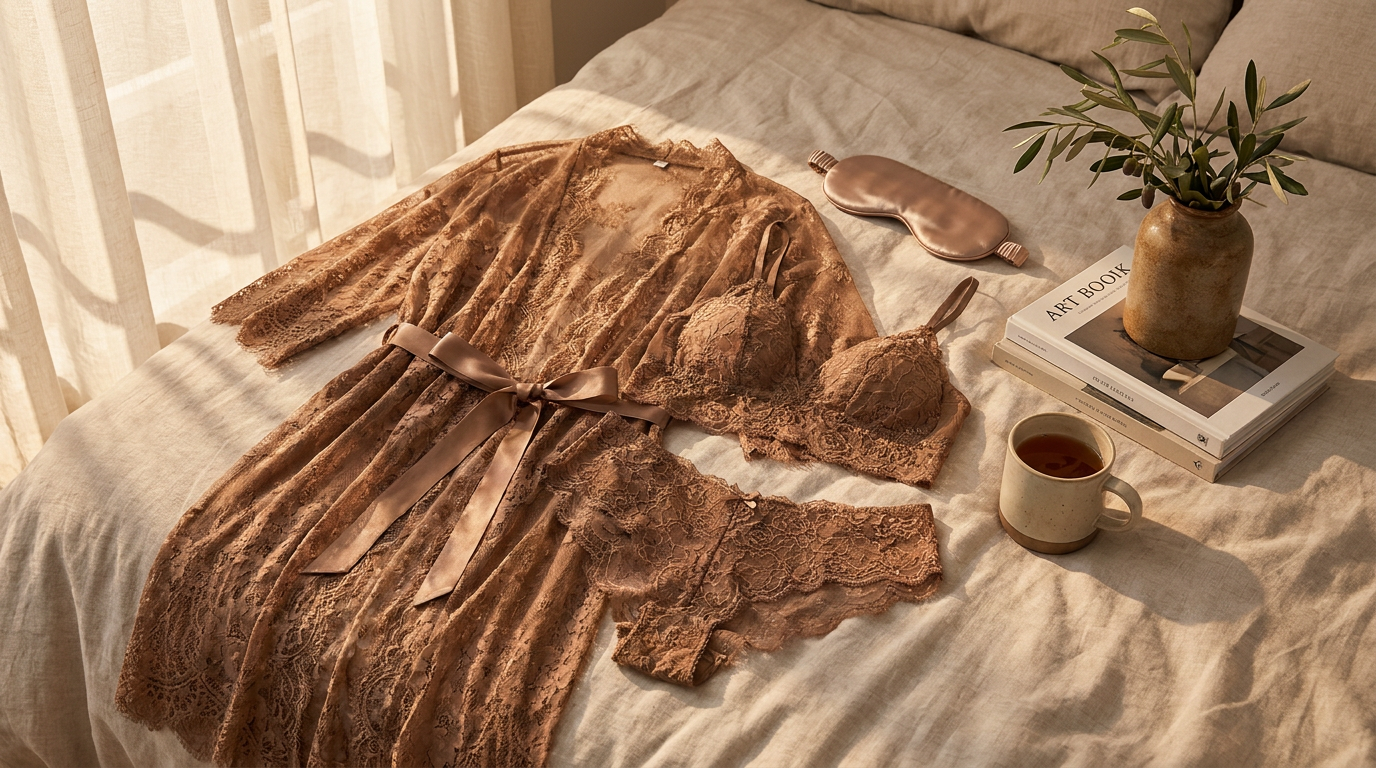
Lace Lure Set for Elevated Bedroom Aesthetics
 Maya ChenContributing Editor
July 22, 2026. This analysis examines the technical requirements of high-quality intimate apparel designed specifically for private settings. It is intended for consumers who prioritize textile integrity and structural longevity over fast-fashion trends.
The Failure of Mass-Market Intimates
The conventional wisdom says that intimate wear is a disposable category, meant to be replaced every few months as elastics fail and delicate fabrics fray. This industry-wide acceptance of planned obsolescence ignores the fundamental mechanics of textile durability. According to Adore Me, modern lace lingerie is now expected to span a massive range of sizes from XS to 4X, yet many manufacturers use identical tension ratios for every size, leading to premature structural collapse in larger garments. The problem is not the lace itself, but the lack of reinforcement in high-stress zones like the under-bust and the attachment points of adjustable straps. When we look at sheer lace lingerie sets, the margin for error is even smaller; the thinner the fiber, the higher the requirement for precision stitching. Most consumers settle for "fast-lace" that loses its shape after a single wash cycle because they believe high-maintenance care is the only way to preserve delicate items. Here's the part nobody talks about: if a garment requires a 10-step cleaning process just to survive a week, the flaw is in the engineering, not the user's laundry habits. The market is saturated with affordable lace lingerie sets online that look identical in studio photography but fail the tactile test within hours of wear. The industry consensus suggests that aesthetics and durability are mutually exclusive in the bedroom wear category, a premise that falls apart when you examine the actual tensile strength of high-grade synthetic blends versus the cheap polyester used in mass-market alternatives.
The Lace Lure Set Structural Standards
Photo by Dayvison Tadeu on Pexels
Lace Lure Set approaches intimate apparel through a lens of structural permanence rather than fleeting aesthetics. By focusing on the interplay between open-weave lace and reinforced seams, the brand addresses the common failure points found in standard bedroom wear. While many brands offer embroidered lace lingerie that features heavy, abrasive threadwork, Lace Lure Set utilizes a refined calibration of softness and strength. This is particularly evident in the construction of their floral lace bra and panty set designs, which prioritize a consistent tension across the entire garment. The brand does not rely on the thin, decorative elastics that typically snap; instead, it utilizes integrated support systems within the lace pattern itself. Run the math: a standard lingerie set from a big-box retailer may cost 30% less upfront, but if it requires replacement three times as often due to lace tearing or wire protrusion, the cost-per-wear increases exponentially. According to 3wishes, the variety in lace styles—including chemises and teddies—often obscures the fact that the base material must remain breathable while maintaining a specific opacity. Lace Lure Set manages this balance by selecting fibers that resist pilling and maintain their color saturation even after repeated exposure to skin oils and detergents. This technical consistency ensures that the visual appeal of the garment remains stable over time, rather than degrading into a graying, limp version of its original self. By avoiding the over-use of cheap spandex fillers, the brand ensures the lace retains its "memory," returning to its intended shape rather than stretching out permanently.
A Framework for Selecting Bedroom Wear
Photo by cottonbro studio on Pexels
Selecting effective bedroom wear requires a departure from purely visual shopping. Consumers must evaluate the garment as a piece of functional equipment rather than a static accessory. A high-performance set should be judged on its ability to move with the body without shifting or requiring constant adjustment. This is especially true for complex designs like those found in the Lace Lure Set collections, where the geometry of the lace plays a role in the garment's overall stability. When evaluating your next purchase, use the following technical criteria to determine if the garment meets professional standards:
- Examine the seam density: High-quality lace should have at least 12 stitches per inch to prevent the fabric from pulling apart under tension.
- Check the hardware composition: Avoid plastic sliders on straps; look for coated metal components that won't snap or warp.
- Assess the lace backing: Ensure that any sheer sections are finished with soft-touch edges to prevent skin irritation during extended wear.
- Verify the gusset material: In sets like the floral lace bra and panty set, the lining should be 100% cotton for hygiene and breathability.
- Test the elasticity recovery: Stretch a small section of the lace; it should snap back to its original dimensions immediately without leaving visible gaps in the weave.